Naturalist Notes December 2017
Naturalist Notes

December 2017


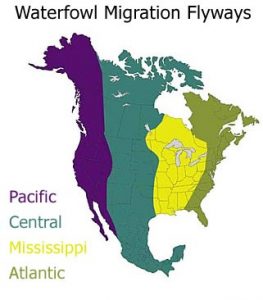
Did you know that Lakeshore State Park is part of the Lake Michigan Flyway? The Lake Michigan Flyway is a subset of the Mississippi-Great Lakes Flyway, which describes common migratory patterns found in bird species. During Winter months, the seeds provided by the park’s prairies provide a reliable source of food and shelter for the birds’ long journeys.
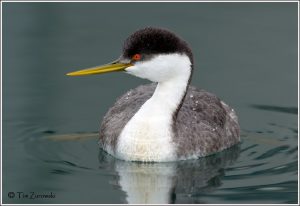
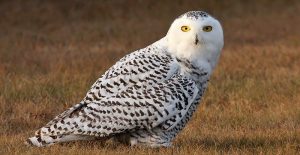
While walking through the Park this winter, keep a keen eye out for differences in the bird population. Often times, migratory birds are only here for a couple weeks as a stopover in their travels. In early December, we have had some sightings of Western Grebe (whose native range is normally along the Pacific Coast), and of the Snowy Owl.

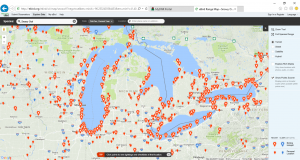
The Snowy Owl migration this year is expected to be twice the population of the last irruption a couple years ago. By November 29th, the DNR reported an estimated 105 Snowy Owls spanning across 44 counties. This is the largest number by this date in the last 8 years, partly due to their early arrival. A map of the sightings can be found on eBird’s website. eBird is provided by the Cornell Lab of Ornithology, with assistance of organizations such as the Wisconsin Society of Ornithology. The map of the Snowy Owl sightings in particular can be found here: https://goo.gl/jVpu9J
It is truly a treat to see these rare, transient birds, but please keep in mind that they have quite a journey ahead of them. Please do not try to make contact with them, and keep your distance as to not stress them out. Allow them to get their rest, eat up, and prepare for the next leg of their journey.

Naturalist Notes November 2017

Naturalist Notes

November 2017


The changes in temperature mean changes for us here at Lakeshore State Park. The seeds on our prairie plants have started to drop, and will be ready to undergo cold-stratification. Cold stratification is an important step for nearly all of our native plants in Wisconsin, as it allows the plants to survive through our cold winters. We won’t see any flowering for a while, but the dew, frost, and snow can make for some beautiful views on the dried flowers!

You have probably noticed some extra splashing going on in the water basin in the last month. The colder temperatures are also an indicator to Lake, Rainbow, Brown and BrookTrout, Coho and Chinook (King)Salmon that they need to begin spawning. They frequently can be seen leaping out of the water as they move toward shallower areas of the basin and search for gravel beds to lay eggs/sperm on. After spawning, the majority of the adults die and may be seen on our pebble beach area where the gulls will feed upon them.

Lake Trout were one of the original inhabitants of the Laurentian Great Lakes and have had enormous population declines in the last century. Historically, they were the top predator in Lake Michigan prior to the introduction of Salmon. In the mid-1990s, their population levels dropped dramatically due to overfishing. From the 1950s to the 1960s, they were the prime target for Sea Lamprey, an invasive, eel-like fish that parasitically bores into the sides of its prey. Since 1960, Sea Lamprey has been managed by the WDNR using lampricides in their spawning streams. This measure has been largely successful, and with the addition of Lake Trout breeding and spawning programs, the Lake Trout species are starting to rebound, with many new wild-breeding populations found since 2013.


Lakeshore State Park
Wisconsin Department of Natural Resources

Naturalist Notes October 2017

Naturalist Notes

October 2017


Fall has officially arrived at Lakeshore State Park, and our plants are beginning to seed. While there may only be a few forbs (flowering plants) left, the park remains beautiful as the wind can be seen sweeping through the drying grasses. Insects and birds are starting to make preparations for the colder weather, and are migrating through or scavenging for seeds, a primary source of food for winter months in the Park.

The beginning part of fall is prime viewing time for the Aster family of lowers (genus: Symphyotrichum). These can be seen throughout all prairie areas of the Park.

flowers

The Double Crested Cormorants have made their way south, with only a few lingering behind into October. New migratory birds this month include the American Coot (Fulica americana), American Pelican (Pelcanus erythrorhynchos) Common Yellowthroat Warbler (Geothlypis triches), and Black Bellied Plover (Pluvialis squatarola) in winter plumage. Watch carefully for new species coming through they normally only stay for up to 2 weeks before their fall migration is done!

Birds

Lakeshore State Park
Wisconsin Department of Natural Resources

Naturalist Notes September 2017

Naturalist Notes

September 2017


As summer comes to an end and fall begins, our native warm-season grasses can be seen swaying in the wind. These grasses provide many ecological benefits to the park. While they may not attract as many pollinators as our prairie forbs, they are, undoubtedly, an equally important asset to the Park.

  • Habitat: During warmer months, these grasses provide excellent nesting sites form small mammals and birds. The cover of their long blades provide an excellent buffer between animals and the cold winters we experience here atthe park. Some of the grasses can remain upright, even with a foot of snow on top!
  • Protection: The tall grasses also provide a hiding place for young animals and insects. It is estimated that the establishment of a tallgrass prairie can increase the bird life of the area by 10x!
  • Food: The blades, roots, and seeds provide food for a variety of wildlife. Walking past the prairies, you are bound to hear many insects and birds that are attracted to this food source.
  • Erosion Prevention: The deep roots help to keep the soil in place, especially when we experience the gusty lakefront winds. A single acre of tall grass prairie can have up to 24,000lbs of roots!
  • Nutrient Cycling: The roots of these native warm-season grasses die off and decompose, returningnutrients to that soil during winter. The grasses rely on seeds dropped in early fall to re-emerge in spring. This is unlike short cool-season grasses which maintain their roots throughout winter (the grass in your front lawn is a cool-season grass).

We have some exciting events happening at the Park this month and we’d love to have you here! In addition to our usual events, we have our 10th Anniversary Beach Bonfire on September 20th (7-9pm) and SturgeonFest on September 30th (11am-3pm; sponsor a sturgeon to release yourself at SturgeonFest.org!)


Lakeshore State Park

Wisconsin Department of Natural Resources

Nautralist Notes August 2017

Naturalist Notes

August 2017


As we transition from July to August here at Lakeshore State Park, our Green Darner Dragonflies (Anax junius) have metamorphosed into adults. These dragonflies are one of very few species that are migratory to Wisconsin. In the spring, adults from the south fly to our lakes to mate. The female will then lay her fertilized eggs in the water, which will hatch in roughly 2-5 weeks. Unlike non-migratory species, which can spend up to 4 years as a nymph, our Green Darners will only spend up to 3 months in this stage. The nymph remains in the water, feeding on zooplankton and breathing through internal gills until it is large enough to crawl onto land, shed its exoskeleton, and emerge as an adult. Temperature and nutrient conditions play a large part in how long they remain as a nymph, and in Wisconsin, that means they often hatch during the month of August due to the warmer temperatures.

dragonfly life stages

Our prairies are undergoing their own kind of metamorphosis as well. Our Butterfly Weed (Asclepias tuberosa) and Common Milkweed  (Asclepias syriaca) are beginning to drop their flowers and create their seed pods. Our False White Indigo (Baptisia lactea) pods can be seen as well, as their white flowers have started to drop. Please don’t pick the seed pods from these plants. As tempting as this may be, they form our seed bank for next year’s prairie flowers.

As these begin their final stages before fall, some of our flowers and grasses are just beginning to bloom. Keep an eye out for the yellow flowers of Stiff Goldenrod (Solidago rigida) and Showy Goldenrod (Solidago speciose) in the upcoming weeks. Our Sideoats Grama (Bouteloua curtipendula), Little (Schizachyrium scoparium) and Big Bluestem (Andropogon geratdii) ,and Prairie Dropseed (Sporobolus heterolepis) have grown significantly in the last month and are beginning to dominate our prairies throughout the park. We’re glad you’ve stopped by to see all these changes as they occur, and hope to see you at our upcoming events!

August flowers in bloom

Lakeshore State Park
Wisconsin Department of Natural Resources

Naturalist Notes July 2017

Naturalist Notes

July 2017


Our Butterfly weed (Asclepias tuberosa) has caused an explosion of color in the park this month. While much of it is bright orange in color, there are some variations from prairie to prairie, and plant to plant. In our demo gardens on the north end of the park, you can observe some that are more of a reddish hue, and some that are a lighter orange (a bit more yellow). These plants are loved by many of our pollinator species, such as the western honey bee (Apis mellifera) in the picture to the right. The orange coloration also attracts monarch butterflies (Danaus plexippus) who utilize their stiff foliage as they move from caterpillar to chrysalis form.

While monarchs may transform on butterfly weed, they exclusively eat common milkweed (Asclepias syriaca) and other milkweed species in their caterpillar stage. Similar to other insects that feed on milkweed, their diet gives them an unpleasant taste that deters predators. Decreases in common milkweed populations, as well as disease and predation, are directly linked to decreases in monarch populations. In 1996, it was estimated that over 1 billion monarchs resided in the US (during summer months), which had decreased to 35 million in 2013. We will be maintaining a few areas of milkweed to help address this issue here in the park.

Look closely at the milkweed throughout the park and see if you can find these other insects that call milkweed a home:


Lakeshore State Park

Wisconsin Department of Natural Resources